Physics Others
- Editorial
- 10 Jul, 2026
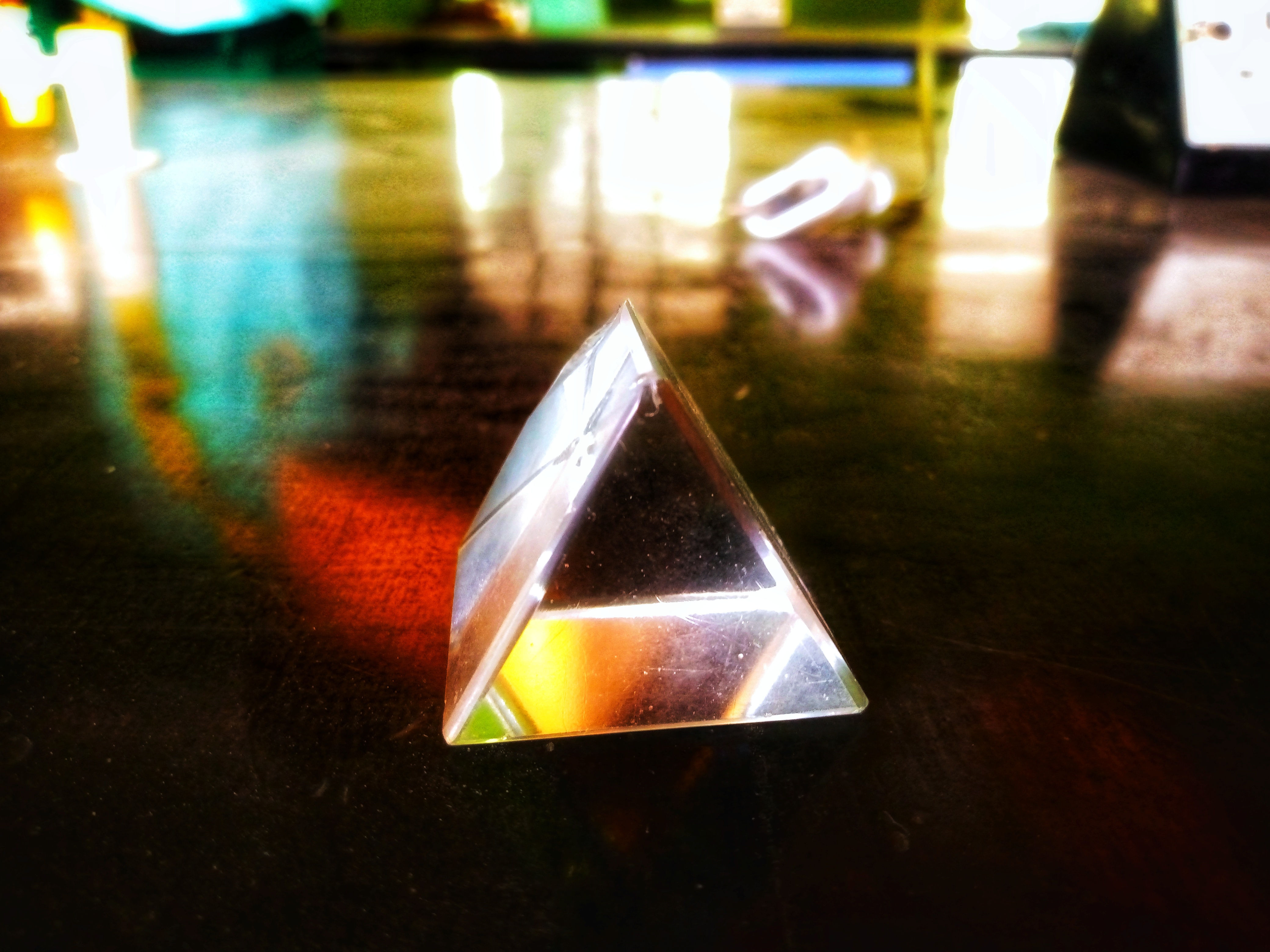
The standard physics curriculum, from Newton’s laws to Maxwell’s equations to the Schrödinger equation, provides an indispensable toolkit for understanding the natural world. Yet the discipline’s true extent reaches far beyond these canonical topics into a constellation of specialized, interdisciplinary, and foundational areas that are often grouped under the vague heading of “other physics.” This article explores several such domains, illuminating the mathematical frameworks that underpin physical theory, the philosophical puzzles that arise at the frontiers of knowledge, and the emerging subfields that challenge our conventional categories.
The Interdisciplinary Reach of Physics
Physics has always been a borrowing and lending discipline. In recent decades, however, the flow of ideas and techniques between physics and other fields has accelerated dramatically. Biophysics, for instance, applies the principles of statistical mechanics and soft matter physics to understand everything from protein folding to the dynamics of neural networks. Geophysicists model the Earth’s interior using wave equations and thermodynamics, while climate physics relies on fluid dynamics and radiative transfer. Even the social sciences have not been immune: econophysics uses tools from statistical physics to analyze financial markets and wealth distributions, treating economies as complex systems far from equilibrium.
This interdisciplinary cross-pollination enriches both donor and recipient fields. For the physicist, it demands a willingness to engage with problems that lack the clean boundary conditions of a textbook exercise. For the partner discipline, it offers rigorous quantitative methods and a fresh perspective. Consider the field of network science, where graph theory and statistical physics combine to study everything from the internet to disease spread. These “other” areas of physics are not mere applications; they often drive new fundamental questions, such as how order emerges in nonequilibrium systems or what governs the resilience of complex networks.
The interdisciplinary spirit is also institutional. Many physics departments now house research groups in biophysics, environmental physics, or materials science. For those interested in the broader scientific landscape, the Physics Articles section offers a window into some of these collaborative efforts. Ultimately, the ability to speak multiple scientific languages is becoming an essential skill for the modern physicist, and these “other” domains are where that skill is honed.

Mathematical Foundations: The Language of “Other” Physics
If experiment is the heart of physics, mathematics is its nervous system. While standard physics training includes differential equations and linear algebra, many of the most exciting developments draw on more advanced or less familiar mathematical structures. Group theory, for example, is indispensable for classifying elementary particles and understanding symmetry breaking in condensed matter. Differential geometry provides the natural language for general relativity, and its extensions—such as fiber bundles—are foundational to gauge theories. Topology, once considered abstract, now explains phenomena like the quantum Hall effect and topological insulators.
These mathematical tools are not merely technical; they often reshape physical intuition. The realization that identical particles in three dimensions obey either Fermi‑Dirac or Bose–Einstein statistics, but in two dimensions can exhibit anyonic statistics, emerged from the topological considerations of braid groups. Similarly, category theory is increasingly used to formalize aspects of quantum field theory and quantum information. Learning this “other” mathematical physics can be daunting, which is why many researchers rely on specialized monographs; the Physics Books page lists several such texts that bridge the gap between formalism and physical insight.
It is worth emphasizing that this mathematical deepening is not an exercise in abstraction for its own sake. The path from Dirac’s bra‑ket notation to the modern formulation of quantum mechanics as a theory of Hilbert spaces was essential for the development of quantum optics and quantum computing. Today’s “other” mathematics is tomorrow’s mainstream physics.
Philosophical Conundrums in Physics
Physics and philosophy were once inseparable; Newton’s Principia was a work of natural philosophy. Although the disciplines drifted apart, the most profound advances in physics inevitably raise philosophical questions that cannot be answered by equations alone. The quantum measurement problem, for instance, forces us to ask what constitutes an observation and whether the wavefunction represents reality or merely our knowledge. The many‑worlds interpretation, de Broglie–Bohm theory, and objective collapse models each offer a different metaphysical picture, yet all reproduce the same experimental predictions. As the physicist John Bell once remarked, “It is the theory which decides what we can observe.”

“I think I can safely say that nobody understands quantum mechanics.” — Richard P. Feynman
Beyond quantum foundations, cosmology presents its own puzzles. Why does the universe appear fine‑tuned for life? Is the arrow of time a fundamental feature or an emergent one? The anthropic principle and the multiverse hypothesis are attempts to grapple with these issues, but they lie at the speculative edge of science. Some physicists lament this “philosophical” turn as a departure from empirical rigor; others see it as a necessary expansion of the scientific imagination.
Engaging with these philosophical dimensions is not an optional extra for the physicist. It cultivates critical thinking about the assumptions behind our models and clarifies the limits of scientific knowledge. For a collection of related discussions, the Selected Academic Publications page includes works that touch on foundational issues.
Emerging Frontiers and Speculative Directions
At any given time, physics has a speculative frontier where hypotheses outstrip data. String theory and its successor, M‑theory, aim to unify all fundamental forces, but remain experimentally unverified. Quantum gravity programs, including loop quantum gravity and causal dynamical triangulations, attempt to reconcile general relativity with quantum mechanics without the full machinery of strings. Meanwhile, the study of dark matter and dark energy—which together constitute 95% of the cosmic energy budget—prods us to consider new particles (axions, WIMPs) or modifications to gravity.
These fields are “other” not because they are marginal, but because they are still in flux. They attract both intense devotion and sharp criticism. The danger is that without empirical checks, theoretical research may drift into a mathematical game. However, history shows that many fundamental breakthroughs began as wild speculations: the neutrino was once a desperate hypothesis to save energy conservation, and the Higgs boson languished for decades before its discovery. Being at the frontier means accepting uncertainty while holding fast to the scientific method.

For those curious about the technical details, the Physics Articles section includes accessible summaries of cutting‑edge research. The key is to maintain a balance between bold hypothesis and rigorous skepticism, to keep “other” physics from becoming “alternate” physics.
Physics in Technology and Society: The Other Side of Impact
Physics is not done in an ivory tower; its “other” face is its tangible impact on technology and society. The transistors that power our digital world emerged from solid‑state physics. Lasers, born from quantum optics, now read barcodes, perform surgery, and cool atoms to nanokelvin. Medical imaging—X‑ray, MRI, PET—are physics‑intensive technologies that save lives daily. Even the World Wide Web was invented at CERN to help particle physicists share data. These applications are so embedded in modern life that we forget their origins in seemingly esoteric research.
This technological dimension raises important ethical and social questions. How should physicists engage with the military applications of their work? What responsibilities do they bear for the environmental impact of high‑energy experiments or rare‑earth mining for electronics? Physics organizations have increasingly included ethics statements and codes of conduct. Moreover, the public communication of physics—another “other” skill—has become vital to counteract misinformation and to inform policy on issues like climate change and energy.
The About Colin Baxter page reflects a career that has spanned both fundamental research and its broader implications. Ultimately, physics is a human endeavor, and its “other” facets—interdisciplinary, philosophical, speculative, applied—are what keep the discipline vibrant and relevant. As we push forward, it pays to remember that the most important discoveries often arise at the boundaries, where physics meets the rest of human knowledge.