Physics Books
- Editorial
- 13 Jul, 2026
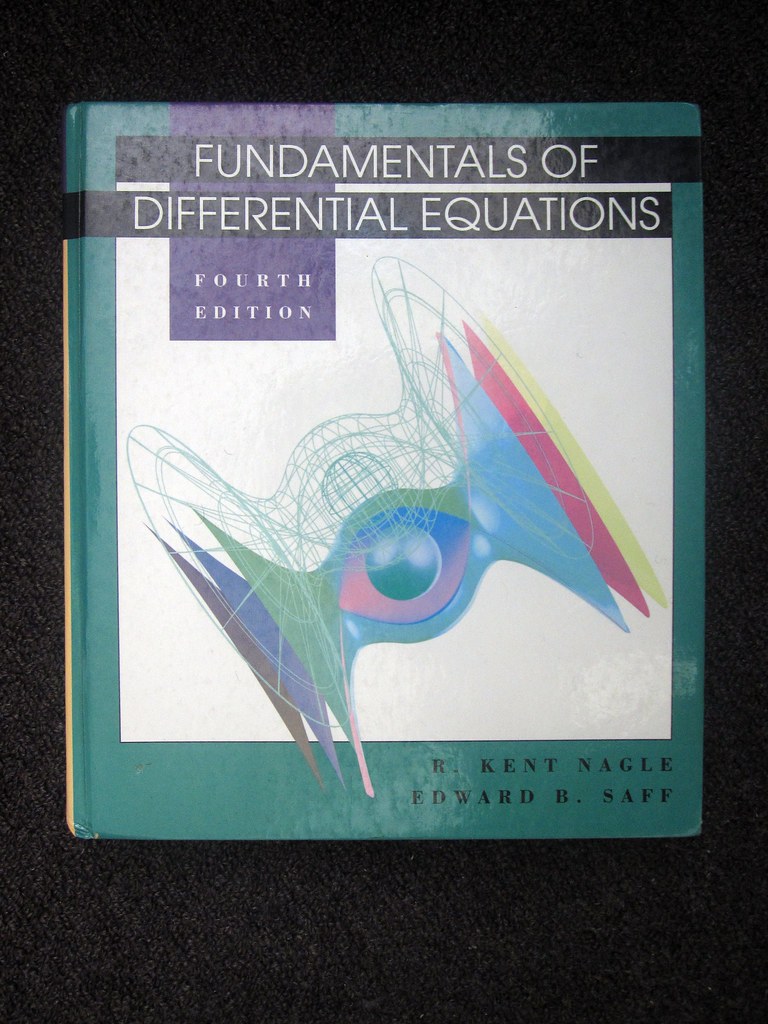
For anyone seriously engaged with physics, the right books are more than just a collection of printed pages – they are guides, mentors, and reference points that shape understanding from undergraduate basics to the frontiers of research. This page offers a curated exploration of the physics literature, highlighting the texts that have educated generations of scientists, and reflecting on how one might build a personal library of enduring value. Alongside these recommendations, you will find links to Selected Academic Publications and Academic Overview resources that place these works in a living research context.
The Evolution of Physics Literature
The written tradition in physics stretches from Galileo’s dialogues to Newton’s Principia and beyond, each era producing books that codify its breakthroughs. In the nineteenth century, Maxwell’s Treatise on Electricity and Magnetism set a standard for comprehensive theoretical exposition, while the early twentieth century saw the emergence of textbooks designed for systematic university instruction. The shift from Latin to vernacular languages democratised access, and the post-war boom brought an explosion of high-quality series like the landmark Berkeley Physics Course.
Today, the physics book market spans a vast spectrum: slim volumes of lecture notes, multi‑thousand‑page encyclopaedic references, and everything in between. What remains constant is the power of a well-structured text to lead the reader from simple principles to complex applications, often with a clarity that purely digital media has yet to match.
Essential Undergraduate Textbooks
Every physics student encounters a core set of topics – classical mechanics, electromagnetism, quantum mechanics, and thermodynamics – and a handful of textbooks have achieved near‑canonical status for conveying these subjects.
- Classical Mechanics: Marion and Thornton’s Classical Dynamics of Particles and Systems and Goldstein’s Classical Mechanics remain the twin pillars, the former excelling in pedagogical clarity, the latter in mathematical rigour.
- Electromagnetism: David Griffiths’ Introduction to Electrodynamics is beloved for its conversational style and careful physical reasoning, while Wangsness’s Electromagnetic Fields offers a slightly more formal alternative.
- Quantum Mechanics: Griffiths again provides a gentle entry with his Introduction to Quantum Mechanics; more advanced students often turn to Sakurai’s Modern Quantum Mechanics or Landau and Lifshitz’s brief but profound volume.
- Thermal Physics: Blundell and Blundell’s Concepts in Thermal Physics and Reif’s Fundamentals of Statistical and Thermal Physics are widely trusted for their balance of theory and application.

These texts share a crucial quality: they not only present the theory but also develop the thinking required to become a physicist. A further invaluable layer is provided by problem‑rich books such as the Schaum’s Outline series, which allow students to test and refine their understanding.
Advanced Monographs and References
As one moves beyond the undergraduate curriculum, the physics literature fragments into specialised monographs that delve deeply into particular fields. The monumental Course of Theoretical Physics by Landau and Lifshitz remains unmatched in its combination of brevity and depth, covering everything from mechanics to quantum electrodynamics with an elegance that continues to inspire theorists. For classical electrodynamics, Jackson’s Classical Electrodynamics is the definitive graduate‑level text, notorious for its challenging problems but indispensable as a reference.
In condensed matter physics, Ashcroft and Mermin’s Solid State Physics is the standard introduction, while Kittel’s text offers a more compact alternative. For particle physics, Introduction to Elementary Particles by Griffiths or the more encyclopaedic Modern Particle Physics by Thomson provide rigorous foundations. Researchers in general relativity inevitably return to Weinberg’s Gravitation and Cosmology or the classic Gravitation by Misner, Thorne, and Wheeler. These books become lifelong companions, their margins filled with notes from successive readings.
The Role of Problem Books and Solution Manuals
Physics is learned by doing, and a well‑designed problem can teach as much as a whole chapter of exposition. Collections like 200 Puzzling Physics Problems (Gnadig et al.) or the Cambridge Physics Problems series sharpen physical intuition in ways that standard exercises often miss. For formal coursework, companion solution manuals – used judiciously – can reveal alternative approaches and common pitfalls.

“A great physics book is not merely a repository of facts but a training ground for the mind, where each worked example and problem quietly builds the muscle of scientific reasoning.”
Many of these problem books are closely aligned with the classic textbooks mentioned above; using them in tandem transforms passive reading into active engagement. The Physics Articles page extends this active approach, showcasing research papers that often contain illuminating problem‑like challenges.
Digital Resources and the Modern Landscape
The rise of e‑books, online lecture notes, and preprint servers such as arXiv has transformed access to physics knowledge. Open‑access textbooks like those from OpenStax provide free, high‑quality alternatives for many introductory courses. Yet the physical book retains distinct advantages: non‑linear browsing, spatial memory of diagrams, and freedom from screen fatigue.
Institutions often provide access to major reference works through library subscriptions – the Bibliographical Data page offers guidance on locating such resources. A balanced approach integrates the portability of digital formats with the deep‑reading experience of print. For researchers like Colin Baxter, whose work spans both classical physics and modern computational methods, this hybrid strategy is essential.
Building a Personal Physics Library
Selecting the right books is a personal journey that reflects one’s interests and career stage. Neophytes might begin with a small shelf of trusted undergraduate texts, gradually adding specialised monographs as their focus narrows. It is often wise to consult the bibliographies of seminal papers – these frequently cite the books that shaped their authors’ thinking. The Physics Others page lists additional eclectic works that defy easy categorisation but offer unique insights.
Second‑hand bookshops and online marketplaces can be treasure troves, yielding out‑of‑print volumes that still hold immense pedagogical value. Ultimately, the goal is not to amass a large collection but to curate a set of books that genuinely illuminate the principles of physics and the process of discovery.
Whether you are revisiting a classic or exploring a new subfield, the written word remains one of the most powerful tools in the physicist’s arsenal. We hope this overview helps you find the volumes that will accompany your own intellectual growth.