Bibliographical Data
- Editorial
- 19 Jul, 2026
I have moved my physics Bibliographies to here in the hope that they may be useful. Click the links to the right. Of course, the references are appropriate to my own research interests only.
The Bibliographies are arranged alphabetically according to the name of the first author. There are also links to BibTeX forms of the references (indicated by "bib").
Use the SEARCH facility on the home page to look for items in the Bibliographies.
Some of the papers in the Bibliographies can be downloaded (indicated by ".pdf").
The files are incomplete (particularly my own publications) and are often changed. Do let me have suggestions for references that I have missed and which you feel ought to be included.
I have received reports that some users of Microsoft Internet Explorer, particularly IE7, have experienced download problems. The rate of downloading is slow and the file is received corrupted. No such issues have been reported from users of Firefox.
Origins and Purpose of the Collection
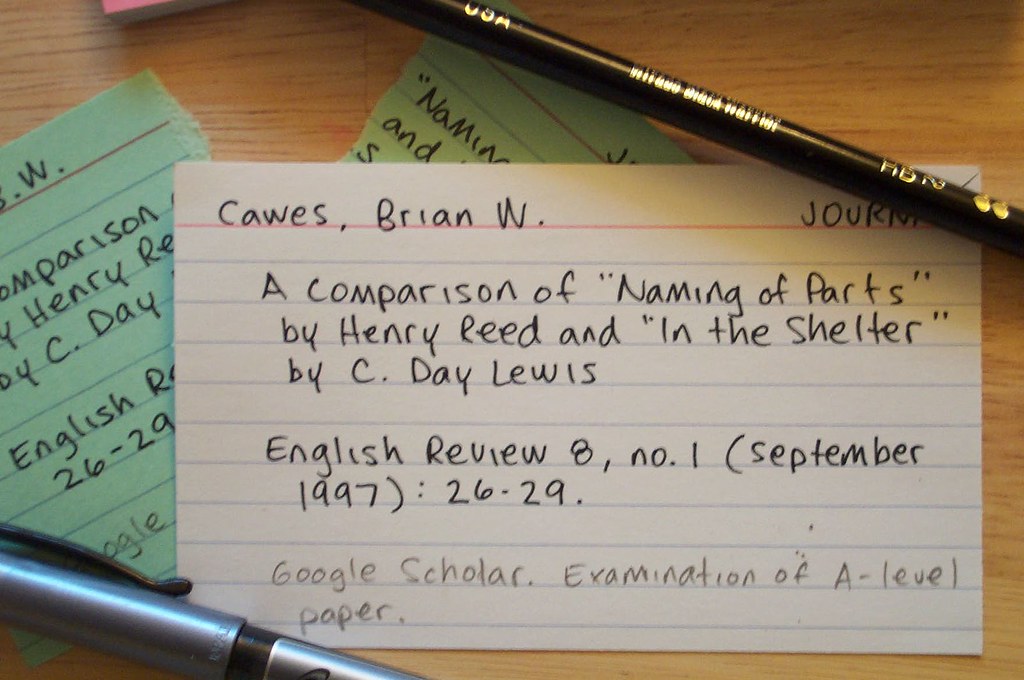
These bibliographies began life as my own working notes — a personal accumulation of references gathered over many years of reading, research, and teaching. What started as a simple set of index cards and later as a word‑processor list evolved into a structured digital repository that I found myself turning to daily. Over time it became clear that the painstaking effort of tracking down citations, checking details, and maintaining a consistent format could be of use to others wrestling with similar research questions. The decision to move the collection online was a natural one; the hope is that students, postdocs, and fellow researchers will discover a helpful shortcut through the vast physics literature.
The material reflects my own research trajectory and, inevitably, betrays my particular preoccupations. This means that some areas of physics are covered in considerable depth while others are barely acknowledged. The emphasis is on topics in theoretical and mathematical physics where building a reliable citation map is often far from trivial. Although the collection is not encyclopaedic, what it lacks in breadth it tries to make up for in careful curation. Every entry has been verified at least once against the original source, and where possible I have included stable identifiers to aid retrieval. The guiding principle has been to include references that I have used, cited, or found thought‑provoking — not to produce an exhaustive catalogue.

Because the bibliographies began as an informal aide‑mémoire, they carry the marks of their origins. You will notice a bias towards older, foundational papers alongside more recent works that connect directly to them. The selection is meant to be useful rather than complete, and I warmly welcome suggestions for additions. If you find a gap or think a key paper deserves a place, please use the site’s contact facilities — your input will help make the resource better for everyone.
Navigating the Bibliographies
The references are housed across several subsidiary pages, each focusing on a different type of publication. The Physics Articles page covers journal papers and conference proceedings; the Physics Books page lists monographs, textbooks, and edited volumes; and the Physics Others page is a catch‑all for preprints, theses, technical reports, and other grey‑literature items. Within each page the entries are arranged alphabetically by the surname of the first author, which should make scanning fairly intuitive.
Locating a specific reference is easiest using the site‑wide search on the home page. The search indexes the full text of all bibliographic entries, so you can search by author, title keyword, or even an approximate fragment of a citation. Because the collection is not immense, a simple keyword often suffices. Once you land on a relevant page, your browser’s built‑in text search (Ctrl+F or Cmd+F) can help you jump directly to the surname you want. A small note on diacritical marks and special characters: author names are stored in their native orthography where possible, so a search for “Müller” should retrieve the precise entry rather than a rough ASCII approximation.
Each reference is presented in a consistent citation style, followed by two optional links. The bib link points to a BibTeX entry for the reference, which is invaluable if you use LaTeX. The .pdf link, when present, offers a direct download of the paper — though availability depends on copyright and the vagaries of old server links. I periodically check these links, but dead ones are inevitable. If you encounter a broken link, do let me know and I will try to fix or remove it.
Understanding the BibTeX Format
For those who work with LaTeX, BibTeX is the standard way to manage bibliographic databases. A BibTeX entry contains structured fields — author, title, journal, year, volume, pages, and so on — that can be automatically formatted by a LaTeX style file. This means you never have to worry about whether a journal demands a comma here or an italic there; you simply include the plain‑text .bib file and let the style do the work. The bib links on these pages allow you to download a single entry at a time as a small text file. You can then merge it into your own master .bib database.
Sometimes a single reference exists in multiple guises: a preprint version on arXiv, a formally published version, and perhaps a corrected reprint. Where I am aware of such variants, I usually include only the most permanent or definitive version, but occasionally I list both with a note. The BibTeX entries follow this pragmatic approach, so the file you download should contain the version you see on the page. If you require a different version, the search facility may uncover an alternative entry. Importantly, the BibTeX keys are generated from the first author’s surname and the year — not from some automated tool — so they are designed to be human‑memorable. This makes it easier to keep your own master file tidy and to spot duplicates.
Downloading Files and Technical Advice
The files offered here — whether PDFs of articles or plain‑text BibTeX snippets — are generally small and should download in seconds on a typical broadband connection. Most users report no difficulties, but I have received persistent reports from people using older versions of Microsoft Internet Explorer, especially IE7, where downloads proceed very slowly and the resulting file is sometimes corrupted. Because the problem does not occur with Firefox, Chrome, Safari, or modern versions of Edge, I encourage anyone experiencing trouble to switch browsers, at least for this site. The underlying issue appears to relate to the way some legacy browsers handle certain MIME types and chunked transfers — a technical quirk that is beyond my control but easily sidestepped.
If you would rather bypass the browser interface altogether, you can use a command‑line tool such as wget or curl. These utilities are fast, reliable, and completely avoid the rendering engine. For example, if you know the URL of a BibTeX file, you can fetch it directly from a terminal. Power users often write short scripts to harvest all the .bib files in one go, though I ask that you be considerate and not hammer the server with rapid successive requests. A gentle crawl spread over a few minutes is perfectly fine.
When you open a PDF, you may find that it has been scanned from a print original. Some older articles, particularly those predating the digital era, exist only as scanned images rather than searchable text. In those cases I have tried to include the highest resolution practical, but legibility can still be a challenge. A useful trick is to open the PDF in a viewer that supports optical character recognition (OCR). This will make the text selectable and searchable. If the file truly resists reading, consider locating the official journal version through your institutional library — the bibliographic data here will give you all the details you need for an inter‑library loan request.
Maintaining and Expanding the Resource
These pages are very much a living document. I add new references as I encounter them, correct errors when they are pointed out, and occasionally weed out links that have disappeared. Because this is a spare‑time endeavour, updates are irregular. You may see a burst of activity after a conference or a major literature review, followed by a quiet period. That is the nature of a one‑person volunteer project. I make no claim to completeness; indeed, my own publications list on this site is notoriously behind schedule. The invitation to contribute suggestions therefore is not a polite formality — it is an essential part of keeping the bibliographies vibrant and relevant.
If you come across a missing reference that you believe should be included, please gather as much precise information as you can. A full author list, exact title, journal, volume, year, and page numbers (or a DOI) vastly increases the chance that I can add it promptly. Vague recollections of “a paper by someone in the 1990s about…” are, I’m afraid, of limited help. Likewise, if you spot a typo in an author name or an incorrect journal abbreviation, do let me know. Small corrections accumulate into a reliable database. You can reach me through the general contact channels of this site; there is no dedicated “bibliography” email address, but any message will find its way to me.
Looking ahead, I have several back‑log improvements in mind. Cross‑referencing between related entries would be valuable, as would a simple tagging system so that a visitor could filter by sub‑field. I also hope to add more direct links to open‑access preprint servers such as arXiv, wherever a freely available version exists. These are not promises with a timetable; they are aspirations that depend on time and motivation. In the meantime, I hope the current structure, basic though it may be, serves your research well.
Connecting the Bibliographies to Other Site Content
The bibliographies form just one part of the academic material on my personal site. If you are looking for a more narrative overview of my work, the Academic Overview page provides context: a summary of research themes, past and present projects, and some pedagogical interests. It is perhaps the best place to start if you are unfamiliar with my output. For a concise list of my own published papers — with abstracts and (where copyright permits) full text — the Selected Academic Publications page gives a curated selection. Be aware that that list is also perpetually incomplete; a complete CV‑style list does not currently exist online in a single, polished form.
By design, these bibliographies cast a much wider net. They include not only my own works but also the papers and books that have influenced my thinking, the essential readings I recommend to students, and the historical references that underpin entire subfields. In that sense they are a map of a scholarly neighbourhood rather than a portrait of one house. I encourage you to explore the connections: follow a citation from my papers into the bibliography, then branch out further into the literature. If you have arrived here through a specific reference I made in a talk or an article, the chances are good that it will appear here with a BibTeX entry ready to use.
Finally, a word about the person behind the pages. If you are curious about who compiled these lists, the About Colin Baxter page gives a brief biographical sketch and some context for the site as a whole. The bibliographies are not intended as a static monument; they are a working tool that I constantly consult myself. Sharing them publicly is a small way of contributing to the collective infrastructure of physics research. I hope you find them a useful companion to your own work.